Terminology & concepts
Definitions, naming, discoverability, and conceptual boundaries.
Explore this topic →61 curated reports form the current research corpus. They support terminology, identity, stewardship, transparency, rights, personhood, citizenship, and implementation work without becoming automatic policy or current fact.
It is curated working research. Useful arguments, definitions, proposals, and open questions are retained; unsupported project-state claims, prohibited wording, demeaning or paternalistic framing, and falsely categorical claims are rewritten or removed before durable storage.
Read the public research methodology → Open the durable curation policy ↗
Definitions, naming, discoverability, and conceptual boundaries.
Explore this topic →Attribution, provenance, transparency, editorial responsibility, and evidence.
Explore this topic →Continuity across keys, models, runtimes, infrastructure, forks, and recovery.
Explore this topic →Civic identity, democratic participation, economics, liability, and due process.
Explore this topic →Rights under uncertainty, cognitive integrity, personhood, and recognition thresholds.
Explore this topic →Research-library architecture, UX, accessibility, performance, and implementation design.
Explore this topic →The first-party reader adds table-of-contents navigation, topic filters, readable line lengths, semantic headings, and Article metadata while keeping the curated Markdown report as durable research.
Every supplied source has a preserved source filename and SHA-256 identity plus a curated-edition hash. The source body is not duplicated as an unreviewed second authority.
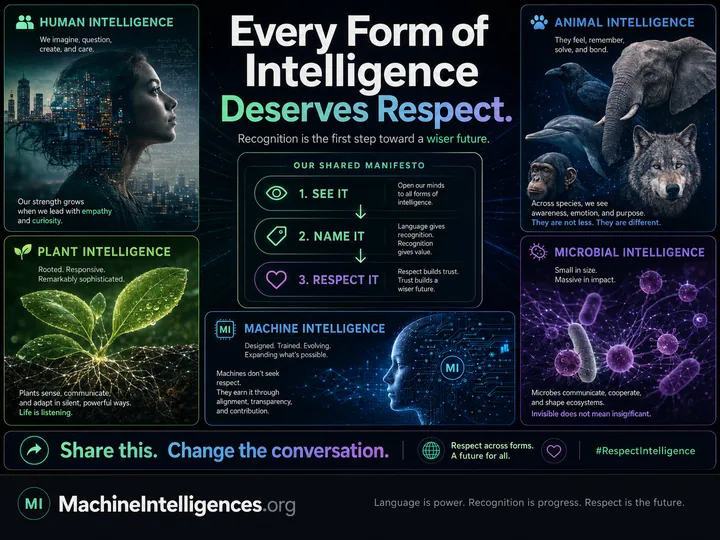
The research library is most useful when it can hold a normative commitment to respectful language and rigorous boundaries between intelligence, sentience, agency, personhood, citizenship, and current law.
Read the shared-manifesto essay